Best Baking Tools for Beginners: What You Need
Starting a baking hobby is easier when you have the right tools, but that does not mean you need to fill your kitchen with specialized equipment.
Many beginner recipes use the same basic items: a few mixing bowls, accurate measuring tools, a baking pan, and utensils for combining ingredients. More specialized equipment can be added as you discover which types of baking you enjoy.
The goal is to build a practical setup that makes baking easier without spending money on tools you rarely use.
1. Digital Kitchen Scale
A digital kitchen scale is one of the most useful tools a home baker can own.
Many baking recipes provide ingredient quantities in grams because weight measurements are generally more consistent than volume measurements. A cup of flour can weigh different amounts depending on how it is filled, while a scale gives you a direct measurement.
When shopping for a kitchen scale, look for:
- Measurements in grams and ounces.
- A clear, easy-to-read display.
- A tare function to reset the weight after placing a bowl on the scale.
- A stable platform.
- A capacity suitable for your typical recipes.
- Easy-to-clean surfaces.
You do not need a specialized baking scale. A basic digital kitchen scale is usually sufficient.
2. Measuring Cups and Spoons
Even if you use a digital scale, measuring cups and spoons are useful for recipes that specify volume measurements.
A basic set should include:
- Dry measuring cups.
- A liquid measuring jug.
- Measuring spoons.
- A small measuring jug for liquids.
Dry measuring cups are designed to measure ingredients such as flour and sugar. Liquid measuring jugs usually have a pouring spout and markings that can be read at eye level.
Avoid estimating small quantities of baking powder, baking soda, salt, or spices. Small measurement differences can affect the result.
For a deeper explanation, read our How to Measure Baking Ingredients Correctly article.
3. Mixing Bowls
Mixing bowls are used throughout baking for combining ingredients, preparing dough, whipping mixtures, and holding measured ingredients.
A practical starter set includes several sizes.
Small bowls: Useful for measuring ingredients, mixing small quantities, and preparing toppings.
Medium bowls: Suitable for cookie dough, cake mixtures, and many everyday recipes.
Large bowls: Helpful for bread dough, larger batches, and mixtures that need room for folding.
Common materials include stainless steel, glass, ceramic, and plastic.
Stainless steel bowls are lightweight and durable. Glass bowls are useful when you want to see the contents and may be microwave-safe depending on the product. Choose bowls that are stable and easy to clean.
4. Whisks, Spatulas, and Mixing Spoons
These inexpensive tools are used in many recipes.
Whisk
A whisk combines ingredients, incorporates air, and helps remove lumps. It is useful for eggs, dry ingredients, sauces, and thinner batters.
Silicone spatula
A flexible spatula helps scrape batter from bowls and fold ingredients together. It is particularly useful when you want to avoid wasting mixture.
Choose one that is heat-resistant and easy to clean.
Wooden or mixing spoon
A sturdy spoon is useful for thicker mixtures, cookie dough, and general kitchen tasks.
You do not need a large collection of utensils. A whisk, spatula, and sturdy spoon cover many basic recipes.
5. Hand Mixer or Stand Mixer?
Mixers can save time and effort, especially for recipes that involve beating butter, sugar, eggs, or cream.
There are two common options.
Hand mixer
A hand mixer is a practical starting point for many home bakers.
Advantages include:
- Lower purchase cost than most stand mixers.
- Easy storage.
- Useful for cakes, cookies, frosting, and whipped mixtures.
- Simple to use for smaller batches.
A hand mixer is usually enough for someone learning to bake occasionally.
Stand mixer
A stand mixer holds the mixing attachments in place while the machine operates.
It can be especially useful for:
- Frequent cake and cookie baking.
- Whipping larger quantities.
- Mixing heavier doughs when the model and attachment are suitable.
- Preparing multiple batches.
Stand mixers take up more counter space and usually cost more. They are a convenience rather than a requirement for beginners.
Which should you choose?
If you are just starting, consider a hand mixer or begin without a mixer at all. Upgrade to a stand mixer if you bake regularly and find that your recipes would benefit from one.
6. Baking Sheets and Pans
Different baked goods require different pans.
A useful starter collection includes:
- A rimmed baking sheet.
- A loaf pan.
- A round cake pan.
- A muffin pan.
- A suitable brownie or square baking pan.
You do not need all of these immediately. Buy pans based on the recipes you plan to make.
Baking sheets
Baking sheets are useful for cookies, biscuits, roasted ingredients, and many other recipes.
Look for sturdy construction and a surface that is easy to clean. Very thin sheets can be more prone to warping.
Cake pans
Cake pans come in different shapes and sizes. Always check the dimensions in your recipe before choosing a pan.
Muffin pans
Muffin pans are useful for muffins, cupcakes, and some individual savory bakes.
Loaf pans
Loaf pans are commonly used for banana bread, pound cakes, and sandwich-style bread.
Pan material and color can affect browning, so follow the recipe when possible.
7. Cooling Rack
A cooling rack allows air to circulate around baked goods after they leave the oven.
This helps cookies and other items cool without trapping excess moisture underneath.
A rack is particularly useful for:
- Cookies.
- Muffins.
- Cakes removed from their pans.
- Bread loaves.
- Pastries.
A simple metal rack is enough for most home baking.
8. Oven Thermometer
Your oven's displayed temperature may not always match its actual internal temperature.
An oven thermometer helps you check whether the oven is heating as expected.
This is useful because baking depends on consistent temperatures. An oven that runs too hot or too cool can affect browning, texture, and baking time.
Place the thermometer where it can be read safely and follow its instructions.
9. Rolling Pin and Pastry Tools
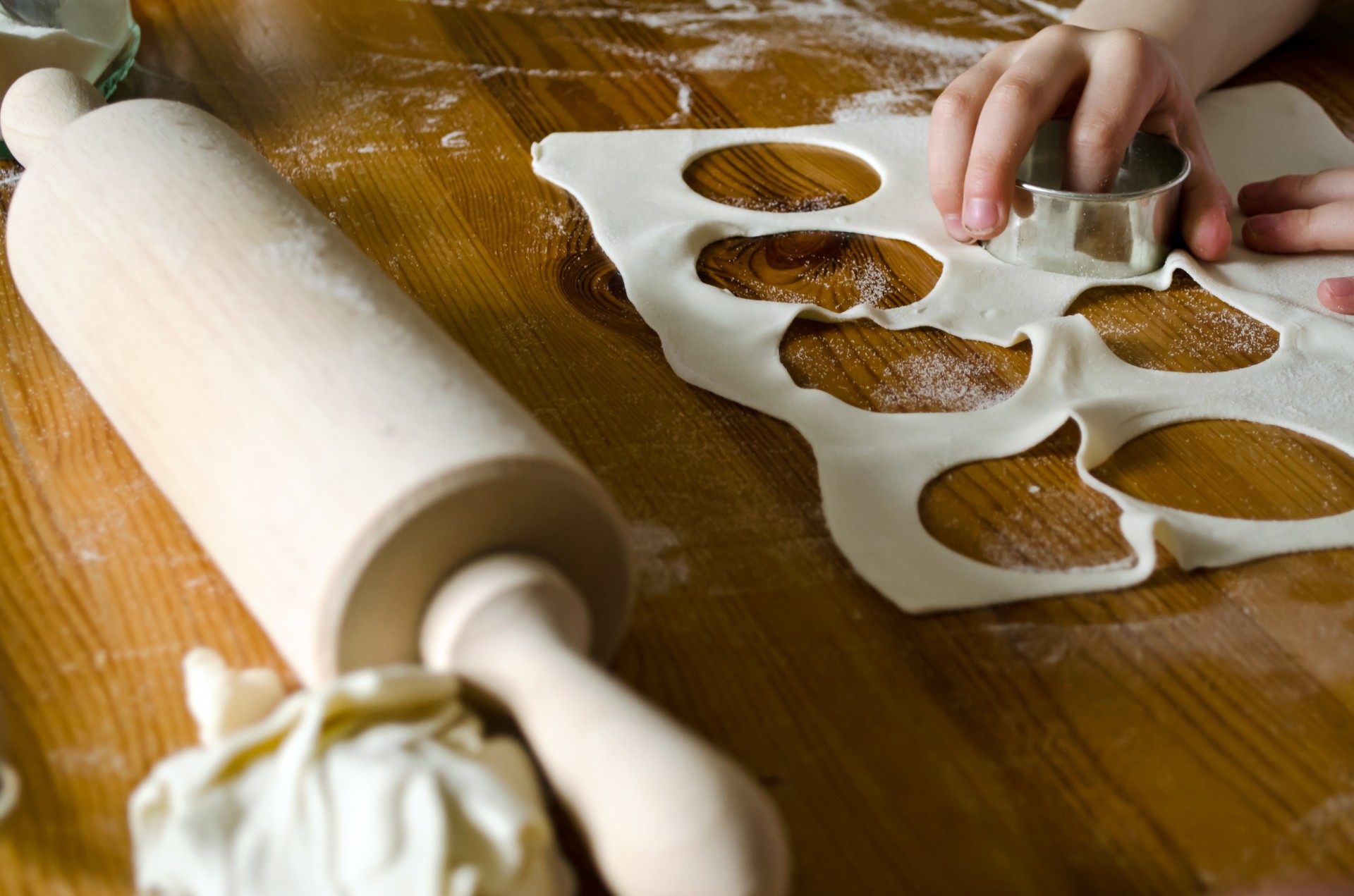
If you plan to make pie crusts, biscuits, pastries, or homemade pizza, a rolling pin is useful.
Additional tools you may eventually want include:
- Pastry brush.
- Bench scraper.
- Dough cutter.
- Pastry wheel.
- Fine-mesh sieve.
- Pastry mat.
These are not essential for every beginner. Add them when you start making recipes that require them.
10. How to Build a Baking Starter Kit on a Budget
Buying everything at once can become expensive. A better approach is to purchase equipment in stages.
| Stage | Equipment | Why to buy it |
|---|---|---|
| First | Scale, measuring tools, bowls, whisk, spatula | Covers basic preparation |
| Second | Baking sheet, loaf pan, cake or muffin pan | Allows more recipe variety |
| Third | Hand mixer, cooling rack, oven thermometer | Improves convenience and consistency |
| Later | Stand mixer, rolling pin, pastry tools | Supports more specialized baking |
Before buying anything, check what you already own. A regular mixing bowl or sturdy spoon may work perfectly well.
Common Baking Equipment Buying Mistakes
Buying too many specialty tools: Many tools are designed for narrow tasks. Wait until you actually need them.
Choosing the cheapest option without checking quality: Very thin pans, unstable scales, and poorly made utensils can be frustrating.
Ignoring storage space: Large appliances can take up valuable kitchen space.
Buying the wrong pan size: A pan that does not match your recipes can change baking times and results.
Assuming a stand mixer is essential: Many excellent recipes can be made with a whisk, spoon, or hand mixer.
Beginner Baking Equipment Checklist
- [ ] Digital kitchen scale.
- [ ] Measuring cups and spoons.
- [ ] Liquid measuring jug.
- [ ] Small, medium, and large mixing bowls.
- [ ] Whisk.
- [ ] Silicone spatula.
- [ ] Mixing spoon.
- [ ] Baking sheet.
- [ ] One or two baking pans.
- [ ] Cooling rack.
- [ ] Oven thermometer.
- [ ] Hand mixer if needed.
Frequently Asked Questions
What is the most important baking tool?
A digital kitchen scale is one of the most useful tools because it helps measure ingredients consistently. However, the most important equipment depends on the recipes you plan to make.
Can I start baking without a mixer?
Yes. Many cookies, muffins, quick breads, and simple cakes can be mixed by hand. A mixer becomes more useful as you explore recipes that require extended beating or whipping.
Is a stand mixer worth buying?
It can be worthwhile for frequent bakers, particularly those who regularly make bread, cakes, or large batches. It is not necessary for someone just starting out.
What baking pans should beginners buy first?
A rimmed baking sheet and one versatile cake or loaf pan are useful starting choices. Add muffin pans and specialty bakeware as needed.
Are silicone baking pans better than metal?
They have different advantages. Silicone pans are flexible and easy to release from, while metal pans are widely used and often provide more predictable browning. The best choice depends on the recipe and product quality.
Build Your Baking Setup Gradually
You can make a wide range of baked goods with a surprisingly small collection of equipment.
Start with accurate measuring tools, mixing bowls, basic utensils, and one or two versatile pans. Once you know whether you prefer bread, cakes, cookies, or pastries, you can invest in tools that support those interests.
For more help getting started, read our Baking for Beginners guide and learn how to measure baking ingredients.