
Baking for Beginners: A Complete Guide
Baking is a hobby that combines creativity, practical skills, and a little patience. It can start with something as simple as a batch of cookies and develop into making homemade bread, decorated cakes, pastries, and desserts.
Unlike some hobbies, baking produces something you can share or enjoy when you finish. It also teaches useful skills that improve with practice, from measuring ingredients accurately to understanding how heat changes dough and batter.
Getting started does not require a professional kitchen or expensive equipment. A few basic tools, familiar ingredients, and reliable recipes are enough to begin.
What Is Baking?
Baking is a method of preparing food using dry heat, usually inside an oven. It is used to make a wide range of foods, including bread, cakes, cookies, pastries, pies, muffins, and savory dishes.
Different types of baking involve different techniques.
- Bread baking: Making loaves, rolls, flatbreads, and other products using dough.
- Cake baking: Preparing cakes using batters, leavening agents, and ingredients such as flour, sugar, eggs, and butter.
- Cookie baking: Making small baked treats with different textures, flavors, and shapes.
- Pastry baking: Working with dough to create pies, tarts, croissants, and other layered or filled products.
- Savory baking: Preparing foods such as quiches, savory pies, rolls, and baked casseroles.
You do not need to choose one specialty immediately. Trying different recipes is a good way to discover what you enjoy.
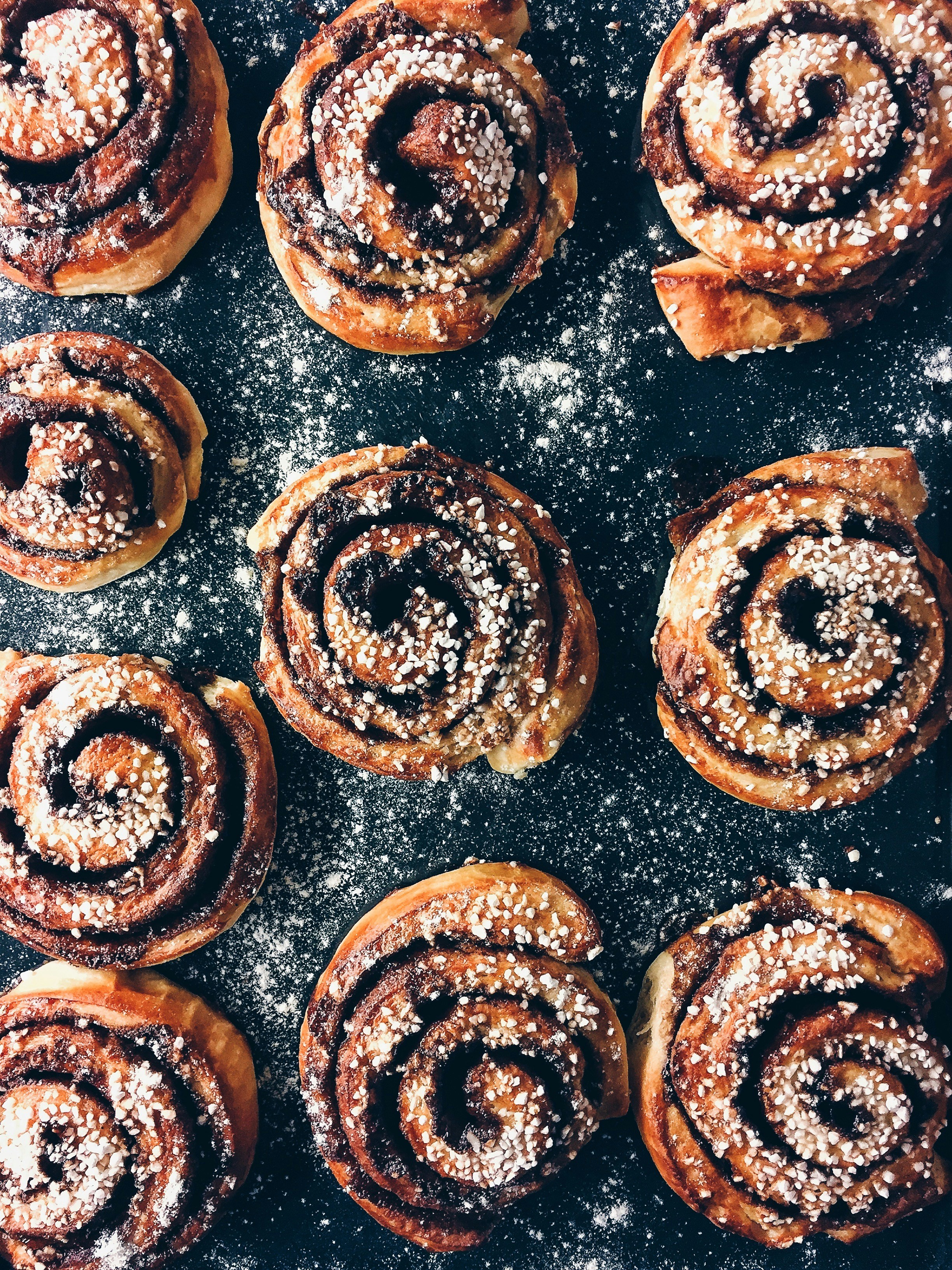
Essential Baking Ingredients
Most beginner recipes use a relatively small collection of ingredients. Learning what they do makes it easier to understand recipes and troubleshoot problems.
Flour
Flour provides structure in many baked goods. All-purpose flour is a useful starting point because it works in many cookies, muffins, cakes, and other recipes.
Bread flour has a higher protein content than typical all-purpose flour and is often used for yeast breads that benefit from stronger gluten development. Cake flour is more finely milled and generally lower in protein, making it useful for tender cakes.
Different flours are not always interchangeable without changing the result.
Sugar
Sugar adds sweetness, but it also affects texture, moisture, browning, and how baked goods spread.
Common varieties include:
- Granulated sugar.
- Brown sugar.
- Powdered sugar.
- Specialty sugars used in particular recipes.
Brown sugar contains molasses, which contributes moisture and a deeper flavor.
Eggs
Eggs provide structure, moisture, richness, and binding. They also help create texture and contribute to browning.
Unless a recipe specifies otherwise, use the egg size stated in the instructions.
Butter and oil
Fats add flavor and influence texture. Butter is common in cookies, cakes, and pastries, while vegetable oils are used in many cakes and quick breads.
Butter temperature matters. Softened butter, melted butter, and cold butter behave differently in recipes.
Leavening agents
Leavening agents help baked goods rise.
- Baking powder: Contains the components needed to produce gas when activated by moisture and heat.
- Baking soda: A base that needs an acidic ingredient in the recipe to produce carbon dioxide.
- Yeast: A living microorganism that ferments sugars and produces carbon dioxide, helping bread dough rise.
These ingredients serve different purposes and should not be substituted casually.
Salt and flavorings
Salt balances sweetness and enhances flavor. Vanilla extract, spices, citrus zest, cocoa, and other flavorings help create variety.
Basic Baking Equipment
You can begin with a small collection of tools. There is no need to buy every gadget in the baking aisle.
A useful starter collection includes:
- Mixing bowls.
- Measuring cups and spoons.
- A digital kitchen scale.
- Whisk.
- Silicone spatula.
- Wooden spoon.
- Baking sheet.
- Cake or loaf pan.
- Cooling rack.
- Oven thermometer.
A hand mixer is useful for recipes that require creaming or whipping, although many simple recipes can be mixed by hand.
A digital scale is particularly helpful because measuring ingredients by weight is often more consistent than measuring by volume.
For more detailed equipment advice, see our Best Baking Tools for Beginners guide.
Learn to Measure Ingredients Correctly
Accurate measuring is one of the most important beginner baking skills.
Cooking often allows room for improvisation, but baking recipes rely on ingredient proportions to produce a particular texture and structure.
For dry ingredients measured by volume, follow the method specified in the recipe. For flour, this often means gently spooning it into a measuring cup and leveling the top rather than packing it down.
A kitchen scale can make measuring more consistent, especially for flour, sugar, and butter.
Liquid ingredients should be measured using a liquid measuring jug on a level surface.
Read our guide to How to Measure Baking Ingredients Correctly for more detail.
Understand Basic Baking Techniques
You will encounter a few techniques in many beginner recipes.
Mixing
Mixing combines ingredients into a consistent batter or dough. Some recipes call for gentle mixing, while others require more vigorous beating.
Follow the recipe's instructions because the amount of mixing affects the finished texture.
Creaming
Creaming means beating softened butter and sugar together until the mixture becomes lighter and more aerated. This technique is commonly used in cookies and cakes.
Folding
Folding gently combines ingredients while preserving some of the air in a mixture. It is often used when incorporating whipped egg whites or whipped cream.
Kneading
Kneading works dough to develop gluten. It is common in yeast bread recipes and helps create an elastic dough.
Proofing
Proofing allows yeast dough to rise before baking. The dough needs suitable conditions and enough time to develop.
These techniques become easier with practice. Our Essential Baking Techniques for Beginners guide covers them in more detail.
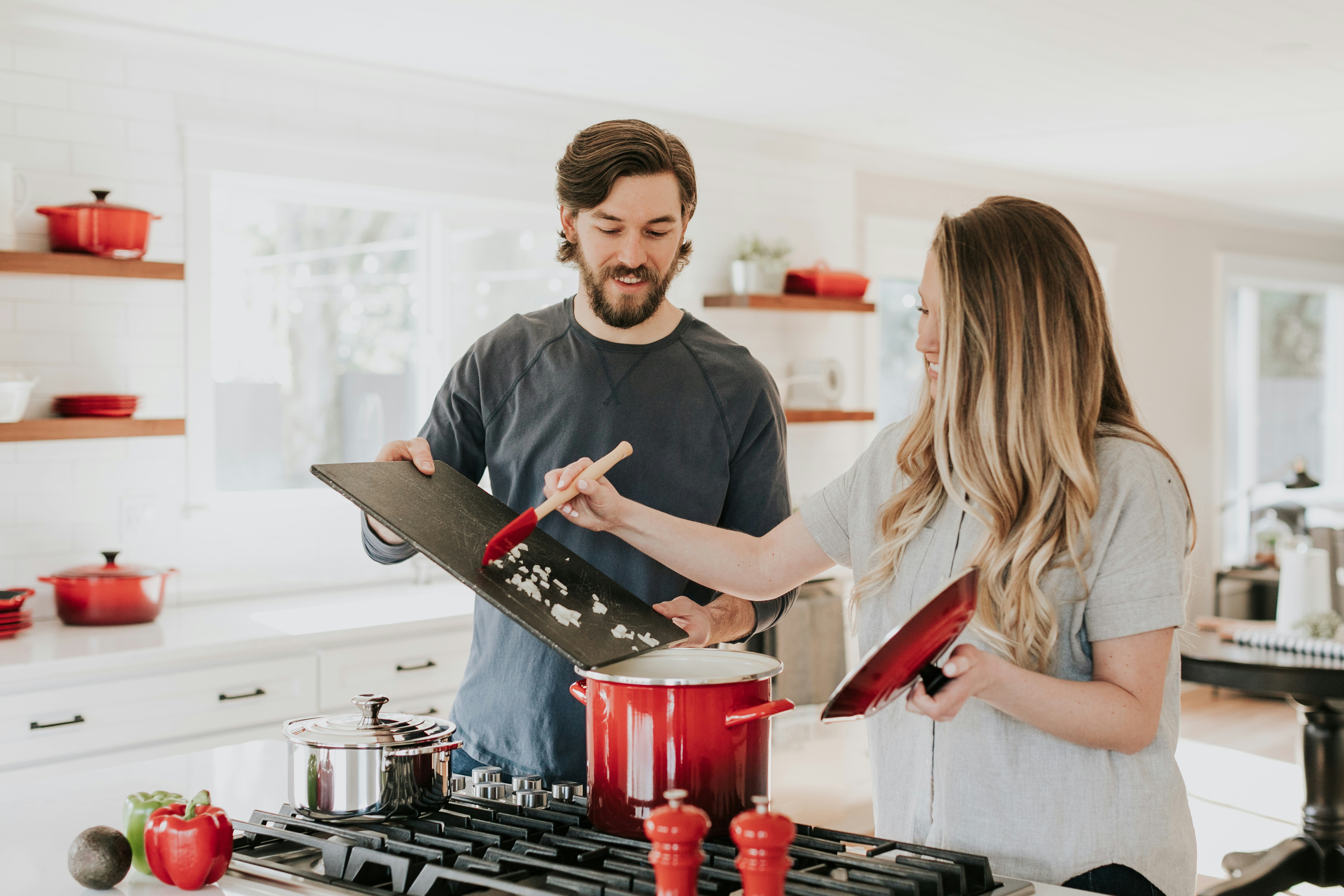
Five Beginner-Friendly Things to Bake
Start with recipes that teach useful skills without requiring complicated equipment.
1. Chocolate chip cookies
Cookies are a good introduction to measuring, mixing, portioning, and understanding how oven temperature affects spreading.
2. Banana bread
Banana bread is a useful way to practice mixing a quick-bread batter. It also introduces ingredients such as baking soda and mashed fruit.
3. Basic muffins
Muffins are relatively simple and teach the importance of avoiding excessive mixing. Many recipes can be adapted with fruit, nuts, or chocolate.
4. Simple brownies
Brownies introduce the relationship between fat, sugar, chocolate, and texture. Different recipes produce fudgy or more cake-like results.
5. Basic homemade bread
Bread takes more time than cookies or muffins, but it introduces yeast, kneading, proofing, and dough development.
Choose a straightforward recipe before attempting elaborate sourdough or enriched breads.
Why Following a Recipe Matters
When starting out, follow the recipe closely rather than making several changes at once.
Pay attention to:
- Ingredient quantities.
- Ingredient temperatures.
- Mixing instructions.
- Pan size.
- Oven temperature.
- Baking time.
- Cooling instructions.
If a recipe says to soften butter, do not automatically melt it. If it says to fold in flour, avoid beating the mixture aggressively.
Once you understand how a recipe works, you can experiment more confidently.
Common Beginner Baking Mistakes
Some problems are especially common when learning to bake.
Measuring flour incorrectly: Too much flour can make cakes, cookies, and quick breads dry or dense.
Using the wrong ingredient temperature: Cold butter and softened butter behave differently in recipes.
Opening the oven repeatedly: Frequent opening can cause temperature fluctuations and affect baking.
Using an incorrect pan size: A different pan changes the depth of the batter and can alter baking time.
Overmixing: Excessive mixing can develop too much gluten in certain batters, resulting in a tougher texture.
Ignoring cooling instructions: Some baked goods need time to set before they are removed from their pans or sliced.
If something goes wrong, our guide to Common Baking Mistakes and How to Fix Them can help you identify the cause.
How to Improve Your Baking Skills
The best way to improve is to bake regularly and pay attention to the results.
Try keeping a simple baking notebook. Record the recipe, any changes you made, baking time, and what you would do differently next time.
Change one variable at a time when experimenting. For example, if cookies spread too much, investigate the butter temperature, flour measurement, and oven temperature before changing several ingredients at once.
Take photographs of successful recipes so you can remember what worked.
Beginner Baking Checklist
Before your first baking session, make sure you have:
- [ ] A reliable recipe.
- [ ] All required ingredients.
- [ ] Measuring cups and spoons.
- [ ] A digital kitchen scale if available.
- [ ] Mixing bowls and basic utensils.
- [ ] The correct baking pan.
- [ ] An oven that has been preheated as instructed.
- [ ] A cooling rack or suitable cooling surface.
- [ ] Enough time to complete the recipe.
Frequently Asked Questions
Is baking difficult to learn?
Baking has a learning curve, but many beginner recipes are straightforward. Start with simple cookies, muffins, or quick breads and gradually try more involved techniques.
Do I need an expensive stand mixer?
No. A stand mixer is convenient for frequent baking and certain doughs, but a hand mixer or basic utensils are enough for many beginner recipes.
Is baking more difficult than cooking?
They require different approaches. Baking often depends more heavily on precise measurements, ingredient ratios, and timing, while cooking frequently allows more adjustment during preparation.
What is the easiest thing to bake?
Simple cookies, brownies, and muffins are popular starting points because they use familiar ingredients and relatively basic techniques.
How often should I bake to improve?
There is no required schedule. Practicing regularly and repeating recipes helps build familiarity with ingredients, equipment, and techniques.
Start Baking at Home
Baking is a hobby you can develop one recipe at a time. Start with basic ingredients, learn how your oven behaves, and practice a few reliable recipes before moving on to more challenging projects.
You do not need perfect results every time. Each attempt teaches you something about mixing, measuring, temperature, and texture.
Explore our beginner baking equipment guide and learn the essential baking techniques to keep building your skills.